


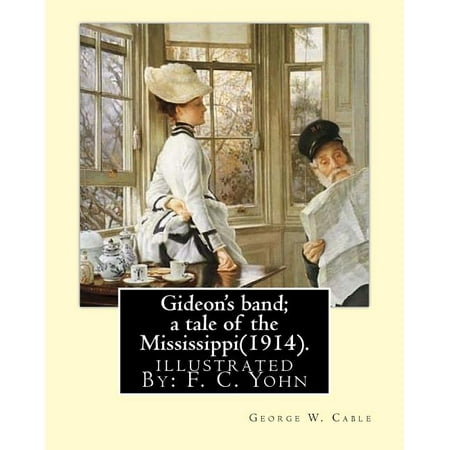
Description
This is a Brand New book in excellent condition. Format: Paperback Author: ISBN10: 1974477290 ISBN13: 9781974477296 Frederick Coffay Yohn February 8 1875 – June 6 1933 often recognized only by his initials F. C. Yohn was an artist and magazine illustrator.Yohns work appeared in publications including Scribners Magazine Harpers Magazine and Colliers Weekly. Books he illustrated included Jack Londons A Daughter of the Snows Frances Hodgson Burnetts The Dawn of a To-morrow and Henry Cabot Lodges Story of the American Revolution. He studied at the Indianapolis Art School during his first student year and then studied at the Art Students League of New York under Henry Siddons Mowbray 1858-1928 . Mowbray studied at the Atelier of Lon Bonnat in Paris. Yohn often specialized in historical military themes especially of the American Revolution as well as the First World War. He designed the 2 cent US Postal Service stamp in 1929 to commemorate the 150th Anniversary of George Rogers Clarks Victory over the British at Sackville. He is best known for his painting of George Washington at Valley Forge. George Washington Cable October 12 1844 – January 31 1925 was an American novelist notable for the realism of his portrayals of Creole life in his native New Orleans Louisiana. He has been called the most important southern artist working in the late 19th century as well as the first modern southern writer. In his treatment of racism mixed-race families and miscegenation his fiction has been thought to anticipate that of William Faulkner. He also wrote articles critical of contemporary society. Due to hostility against him after two 1885 essays encouraging racial equality and opposing Jim Crow Cable moved with his family to Northampton Massachusetts. He lived there for the next thirty years then moved to Florida. Biography: Cable was born in 1844 in New Orleans Louisiana the son of George W. Cable Sr. and Rebecca Boardman Cable. They were wealthy slaveholders who were members of the Presbyterian Church and New Orleans society whose families had moved there after the Louisiana Purchase. First educated in private schools the younger Cable had to get work after his father died young. The elder Cable had lost investments and the family struggled financially. Cable later learned French on his own. He served in the Confederate Army during the American Civil War in which he took part in support of the Southern cause. His experiences changed his ideas about Southern and Louisiana society and he began writing during a two-year bout with malaria. In 1870 Cable went into journalism writing for the New Orleans Picayune. He worked for them from 1865 to 1879 by which time he had become an established writer. In 1869 George Cable married Louisa Stewart Bartlett with whom he had several children. He was invited to submit stories in Scribners Monthly where his story Sieur George published in 1873 was a critical and popular success. He published six more stories of Creole life with Scribners in the following three years. The stories were collected and published in a book in 1879 as Old Creole Days. While romantic in plot the stories revealed the multi-cultural and multi-racial nature of antebellum New Orleans society with ties among French Spanish African Native American and Caribbean Creoles. He also addressed conflicts that arose following the Louisiana Purchase when traditional New Orleans Creoles of color had to confront Anglo-Americans – who ultimately asserted their concept of a biracial society rather than acknowledging the multiracial class of free people of color.In 1880 Cable published his first novel The Grandissimes: A Story of Creole Life portraying multiracial members and different classes of society in the early 1800s shortly after the Louisiana Purchase. It had first been serialized in Scribners. The plot follows the…
Reviews
There are no reviews yet.